

Why Businesses Near AI Data Centers Are the Next Big Commercial Real Estate Play
Picture this: It’s 2:15 AM on a Tuesday in West Texas, and thousands of construction workers are moving across the Lancium Clean Campus near Abilene. Excavators are moving earth, electrical crews are laying high-voltage conduits, and power generators are humming continuously. A half-mile away, a local logistics company owner watches the glow of this 24/7 construction site and realizes a profound economic shift: the rent for his warehouse just became worth 30% more than it was six months ago.
The explosion of artificial intelligence infrastructure is fundamentally reshaping commercial real estate. Unlike past speculative commercial real estate booms, this transformation is backed by massive, locked-in capital flowing directly into physical infrastructure. For SMB owners, operations managers, and logistics planners, acquiring or leasing a warehouse near AI data center Texas locations represents the next generation of commercial real estate plays.
The Catalyst: The Stargate AI Infrastructure Boom
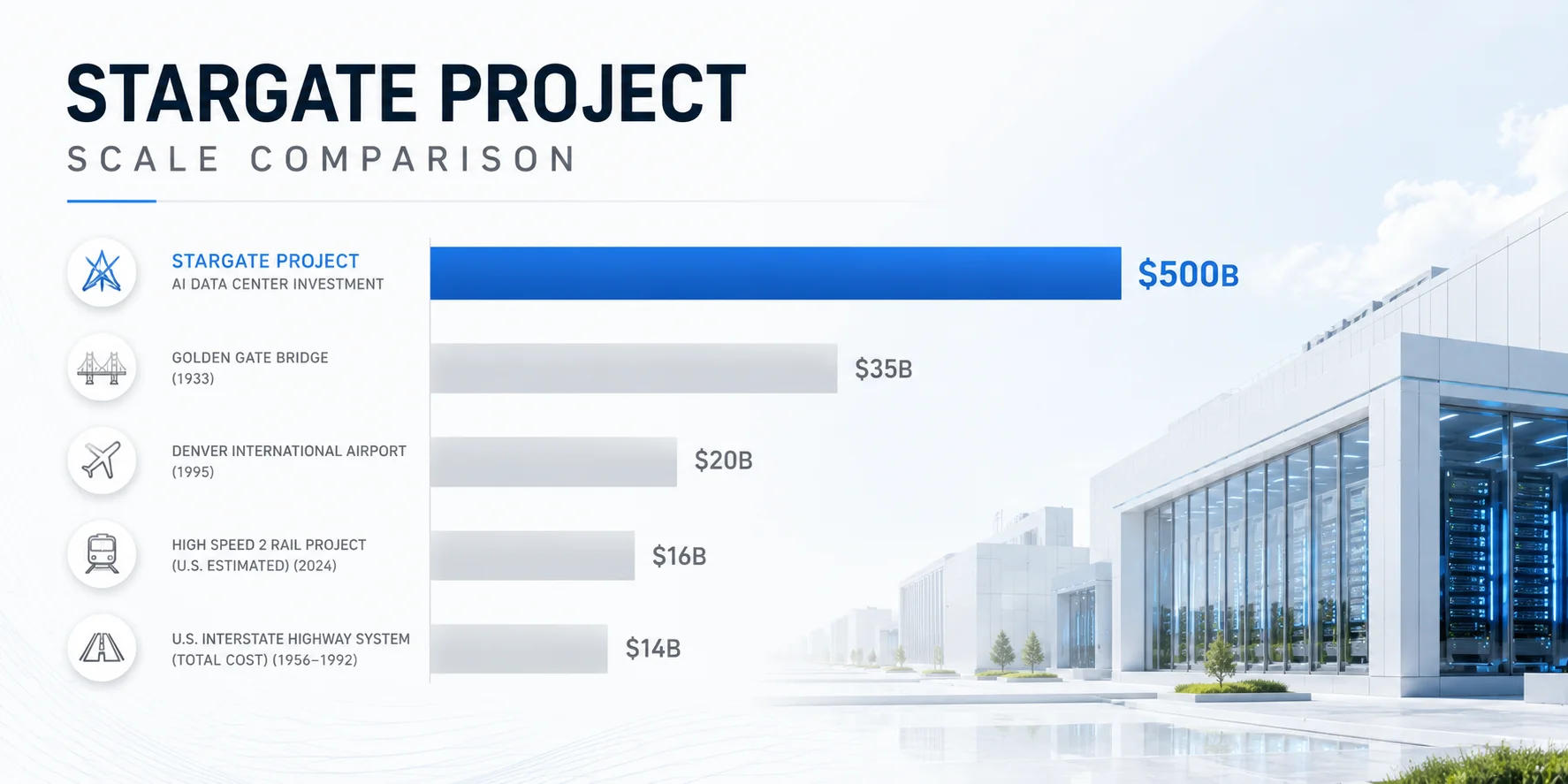
The epicentre of this transformation is Texas, which has emerged as America’s AI infrastructure hub due to its deregulated energy market, robust renewable energy capacity, and strategic geography. The most significant driver is the Stargate project, a $500 billion endeavor involving OpenAI, Oracle, and SoftBank. Stargate encompasses seven locations across the United States that are projected to exceed 9 gigawatts of capacity by 2029. To put that into perspective, 9 gigawatts is comparable to the peak power demand of all of New York City.
The flagship site of this initiative is in Abilene, Texas. Constructed by AI infrastructure company Crusoe, this 1,100-acre campus is designed to house Nvidia Blackwell chips and draw from a mix of grid power and on-site natural gas generation utilizing GE Vernova aeroderivative turbines. The project is a massive economic engine, expected to generate over 9,000 construction jobs and 1,000 ongoing permanent jobs within the first two years of completion, injecting an estimated $30 million annually into the local economy.
The Location Advantage: The Supply Chain and Service Ecosystem
Data centers of this magnitude do not operate in a vacuum; they require a permanent, specialized supply chain ecosystem. Because data centers operate 24/7/365 without closures or seasonal dips, the tenants that support them—mission-critical contractors and logistics operators, require absolute proximity to minimize downtime.
This creates immediate location advantages for businesses positioned within specific concentric zones around the data center:
- 0–5 Mile Radius (Immediate Support): This zone is critical for emergency power generation storage, high-voltage electrical component warehouses, cooling system parts, and rapid-response maintenance contractor facilities.
- 5–25 Mile Radius (Secondary Logistics): This area is ideal for regional distribution centers, equipment assembly, reverse logistics, and white-glove delivery handling.
- 25–50 Mile Radius (Tertiary Operations): Perfect for heavy equipment staging, construction material distribution, and workforce housing.
For specialized contractors, such as HVAC specialists, heavy equipment operators, and telecommunications infrastructure companies, proximity is an operational necessity. Facilities that offer staging areas for high-voltage equipment and secure storage for mission-critical components naturally command premium rents.
Texas Market Realities: Surging Warehouse Demand
The influx of capital is creating a two-tier warehouse market in Texas, where proximity to data centers drives a 15% to 25% rent premium.
- Abilene (The Epicenter): A year ago, 15,000 square feet of industrial space in Abilene could be leased for $5.50 per square foot. Today, warehouses within 20 miles of the Stargate site are commanding $7.25 to $8.50 per square foot. Properties near utility corridors can fetch upwards of $20.00per square foot.
- Dallas-Fort Worth (Diversified Hub): DFW boasts an industrial vacancy rate of 9.2%, with an all-time high average asking rent of $21.01 per square foot recorded in Q4 2025. The South Dallas corridor offers excellent value at $7 to $9 per square foot for businesses looking to serve multiple enterprise data center operators in the region.
- Houston (Energy & Port Logistics): Driven by port access and energy infrastructure, Houston industrial rents hit a record $22.67 per square foot in Q4 2025, recording its 16th consecutive year of positive absorption.
Nationally, the market for small-bay warehouses (under 50,000 square feet) is incredibly tight, with vacancy below 5%. This is exactly the size footprint most service contractors require, leaving tenants with fewer options and landlords with immense pricing power.
Strategic Plays for SMBs and Operators
To capitalize on this infrastructure boom, businesses and investors are utilizing three primary strategies:
- Become a Service Provider (Fast Capital): SMB operations managers can lease a 10,000 to 25,000 square foot facility near a data center and supply specialized staging, parts distribution, or HVAC services. Both Crusoe and Oracle have committed to prioritizing local vendors and suppliers, offering immediate pathways for local businesses to secure lucrative contracts.
- The Triple-Net Lease Investment (Long-Term Appreciation): Real estate investors can acquire industrial buildings and lease them to data center contractors on 5 to 10-year triple-net (NNN) leases. In these arrangements, the tenant covers base rent plus property taxes, insurance, and maintenance, which typically add $1 to $3 per square foot in operating costs.
- Joint Ventures with Contractors (Shared Risk & Upside): Investors with capital can partner with regional electrical or HVAC contractors who have local relationships but limited funding. By co-developing a facility, both parties share the operational cash flow and real estate appreciation.
Conclusion
The convergence of AI infrastructure investment, energy abundance, and localized supply chain requirements is creating a once-in-a-decade commercial real estate opportunity in Texas. Warehouses and light industrial spaces near data center hubs, particularly the Stargate project in Abilene, are transitioning from basic commodity real estate to highly strategic infrastructure assets.
For SMB owners, logistics planners, and commercial real estate investors, the location advantage is clear. Securing a warehouse near AI data center Texas locations ensures proximity to major tech operators, access to highly paid talent, and insulation from traditional real estate market volatility. The window for entry-level pricing is narrowing, and those who position their operations or capital near these hubs today will reap the rewards of the largest infrastructure investment in modern American history.
Q: Is the Stargate project on schedule, or are there delays?
The first two buildings at the Abilene Stargate site came online faster than expected, going operational within roughly 12 months. However, subsequent phases have experienced delays and rising costs, with Stargate developers spending an estimated $19.2 billion per gigawatt. Construction on the third and fourth buildings, originally scheduled for completion in March 2026, is still ongoing as of June 2026. For real estate investors, these delays actually extend the window of the construction boom while overlapping with the early operations ramp.
Q: What is the difference between Cap Rate and Cash-on-Cash Return in this context?
Capitalization Rate (Cap Rate) is calculated by dividing the property’s Net Operating Income by its total value, and typically hovers between 6% and 8% for industrial properties. Cash-on-Cash Return is the annual cash flow divided by your initial cash investment, which often yields 8% to 12% for properties adjacent to data centers with quality tenants.
Q: How do I assess tenant credit quality for a data center contractor?
You should look for tenants with a Dun & Bradstreet rating of 70+, at least three years of operating history, and annual revenues that are 5 to 10 times the annual lease payment. Furthermore, for data center contractors, verify their existing service agreements with the data center, their technical certifications (HVAC, electrical, telecom), and their liability insurance coverage.
Q: What is the typical timeline to profitability if I start a service business near a data center?
Generally, it takes 6 to 12 months to reach positive cash flow, and 2 to 3 years to achieve full operational stability. The first 1 to 2 months involve lease negotiations and equipment procurement, followed by customer acquisition in months 3 to 6. Operators who aggressively pursue contractor relationships can achieve breakeven by month 6.
Q: Are there tax incentives for commercial real estate near Texas data centers?
Yes. Texas offers the Texas Enterprise Project, which provides property tax exemptions for 8 to 10 years for qualifying projects near infrastructure hubs. Local entities, like the Abilene Economic Development Corporation (DCOA), also offer city-specific tax abatements, expedited permitting, and infrastructure support for qualifying tenants.
References
CBRE. (2024). Build-to-suit industrial development: Best practices guide. CBRE Commercial Real Estate Services.
CommercialCafe / CommercialEdge. (2026). National industrial report, February 2026.
Cushman & Wakefield. (2026). Industrial market shows renewed momentum heading into 2026.
Damodaran, A. (2012). Real estate valuation: Principles and practice. NYU Stern School of Business.
Distilled Earth. (2026). OpenAI’s Stargate data centers are taking longer and costing more than its competitors.
Epoch AI. (2026). OpenAI Stargate: Where the US sites stand.
Glassdoor. (2026). Data center jobs in Abilene, TX.
Indeed. (2026). Data center technician jobs in Abilene, TX.
JLL (Jones Lang LaSalle). (2023). DFW airport logistics district market analysis. JLL Commercial Real Estate Services.
National Association of Corporate Real Estate Executives (NACRE). (2023). Tenant evaluation standards for commercial occupancy. NACRE Guidelines.
OpenAI. (2024). OpenAI announces Stargate investment in Abilene, Texas. OpenAI Press Release.
Stewart, E., & Cottier, B. (2026). OpenAI Stargate: where the US sites stand. Epoch AI.
TenantBase. (2026). How much does industrial space cost in 2026?
Texas Economic Development & Tourism. (2024). Tax incentive programs for commercial development. State of Texas Economic Development Division.
Urban Land Institute. (2023). Commercial real estate investment timeline analysis. ULI Research Reports.